Humans of UNAC/UHCP: Sophia Pak, PharmD
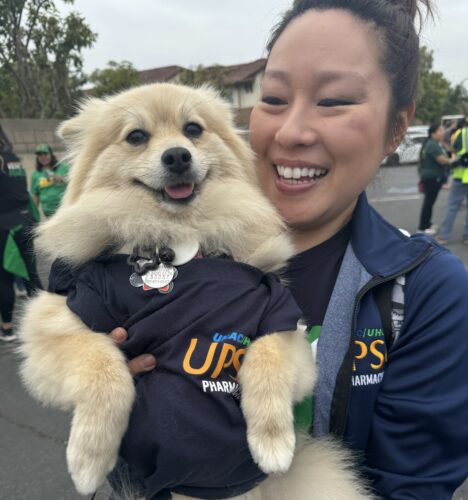
“My mother always wanted to be a pharmacist. In Korea, education was a privilege, not a right. Back then, the sons were expected to go on to higher education. She never got that chance. My parents decided to move to the United States, hoping to give their children choices they never had.
“They owned a dry cleaner and worked six days a week. Sundays were the only official day they were off, and that was the only time we could make the trek from Torrance to Koreatown to do grocery shopping. Torrance in the 80s was different; I was one of four Korean kids at school, and we didn’t even have a Korean grocery store in our city. We’d pack into my Mom’s tiny little hatchback and stuff the trunk full to the ceiling with groceries, everything we needed for the entire week. My Mom would buy bags and bags of Napa cabbage to have a kimchi packing day, seasoning it, stuffing it, putting it away to ferment so we’d have kimchi for the next month. They held onto the culture at every opportunity.
“When I was little, I would line up all my stuffed animals on the floor like they were my students and I was the teacher. I don’t remember what I was saying. I just remember lining them up. That orderliness, that want to take something complex and explain it to someone who needs you: That’s kind of threaded through everything.
“There was a sixth-grade math and science teacher who really loved what she did, but even more than being a teacher, she really loved science. She was so excited whenever she got to teach us about something she loved, and that made me really excited to learn more about science. As I got older, I realized pharmacy is a lot about putting those two things together. You have to have a strong background in science, but you also need to teach your patients. A lot of what we do is counseling patients about their medications, their health, sometimes just lifestyle changes. Much like a teacher, you have to digest the information and break it down into pieces that people of all ages and educational levels can understand.
“I’ve been in oncology now for 16 years. It’s an area where I feel like I can never and will never be complacent because the therapies are constantly changing. When patients are already given nausea medications and they’re still not responding well, that’s when we step in and have to get creative — thinking through drug interactions, what they’ve already tried, what hasn’t worked, what our options are. When I first came out of training, everything was book knowledge. You memorize the regimens, the combinations, the doses. But then you get into practice and that’s not always what works. It takes a lot of finesse.
“When people ask why I took on union work on top of everything else, I think about the culture I grew up in. In Korean culture, you work together as a unit to support one another for the greater good of that unit. When I came out of pharmacy school, the amount of loans I had to repay made it nearly impossible to finance living on my own. My parents let me move back in and didn’t make me pay rent because they understood it was necessary. That’s what family does. You sacrifice for the greater good of the unit.
“That’s the union: Every benefit we have, every protection — someone fought for that.”
—Sophia Pak is an ambulatory care pharmacist at Kaiser Baldwin Park and a member of the 2026 Membership Matters Academy.
#humansofunacuhcp #pharmacist #AAPIM