Contracts & Bargaining
Voices Of UNANC Blogpost
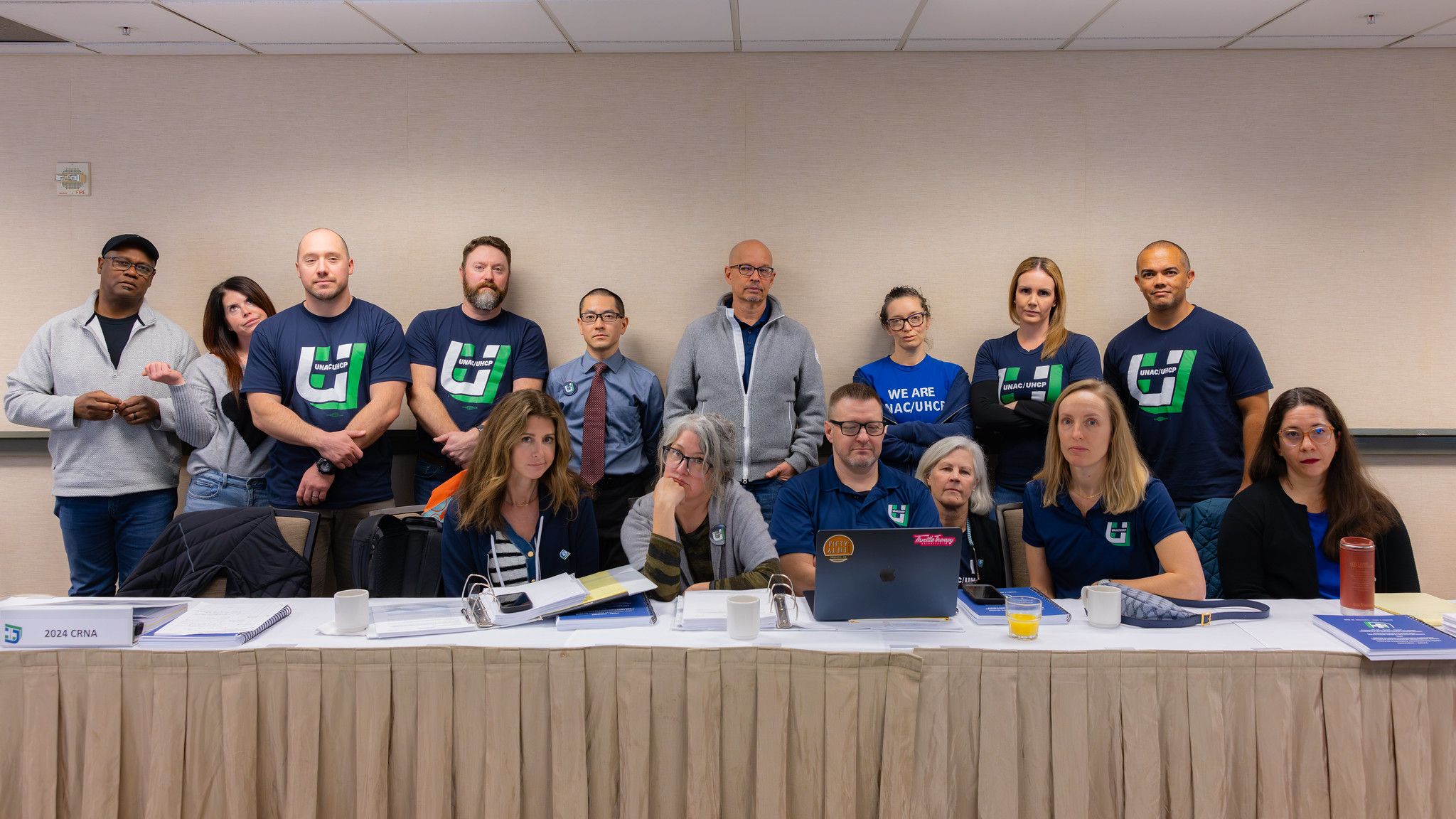
GROUNDHOG DAY
by Sanne Jacobsen, CRNA
On February 2, 2025, Punxsutawney Phil saw his shadow and predicted six more weeks of winter. The CRNA bargaining team, unfortunately, lived through yet another Groundhog Day this past Thursday.
Here’s what happened:
On October 17, Kaiser management presented a proposal on Job Bidding – a topic we had already been working on for several sessions. After discussing it at the table, our team took the proposal back to caucus, carefully reworking a counter-proposal, and presented the counter at our next session on October 30. We engaged in a productive discussion for 90 minutes and by the end of the day, we agreed there was just one small area to iron out. Management stated ‘we’ll get something back to you ASAP.’ It felt as though we were a few words away from a tentative agreement on the topic.
Fast forward nearly five months later.
On February 27, I drove two and a half hours through traffic to arrive in San Jose by 9am. My bargaining team colleague, Chris Sato, spent 4 hours traveling from Sacramento. After caucusing with the UNAC/UHCP team until 11am, Management was finally ready to meet only to pass the EXACT SAME proposal they gave us on October 17. Then, with feigned curiosity, they asked us what our ‘sticking points’ on the proposal were.
What was the point of the October 17 discussion or the work we did in caucus ? of the October 30 meeting? Why did we just spend hours in traffic, hours in caucus, time away from our jobs and our families, to sit at the table and be served this baloney?
Our members see the disrespect. We feel the frustration.
When I relate the events above to my colleagues, they are infuriated. They see the disrespect. They feel the frustration.
Our bargaining team has lived through this same scenario over and over again for the past ten months. We are caught in an endless loop—a real-life Groundhog Day.
But this last Thursday, I made a decision: I dropped the anger and disbelief. I accepted the reality that bargaining with Kaiser right now is nothing more than Kabuki Theatre – a scripted performance. Our management counterparts are like waiters selling food prepared in a kitchen around the block where they have no control. They can’t change it or explain why it tastes the way it does. Yet they pretend to be the cooks, and that we can all work together to create the menu. In reality, the cake is already baked, and Kaiser assumes that we will eat anything put in front of us if we get hungry enough.
The good news? We know where real power lies.
The leadership ABOVE Northern California management, including CEO Greg Adams, publicly support the Labor Management Partnership and the labor that underlies Kaiser’s success. If we shine light on the stone-walling happening in Northern California bargaining, the people sitting across from us at the table will face pressure from above to stop the theatrics and to show up to truly bargain. Not only that, we will send a clear message to management at all levels that we are united and know our true worth.
Here’s our next step:
Your CRNA bargaining team is focused on methodically refining our proposals and being ready to move forward once that pressure forces management to finally negotiate.
But pressure does not happen on its own. It is on us – OUR UNION, you and me – that to turn up the heat. We will expose Kaiser’s disrespect through unified action, including our informational picket on March 11.
Right now, bargaining might feel like Groundhog Day. It might feel like Kabuki Theatre. One thing is certain: we won’t win a fair contract until Kaiser is compelled to bargain in good faith. It’s time to raise the heat.
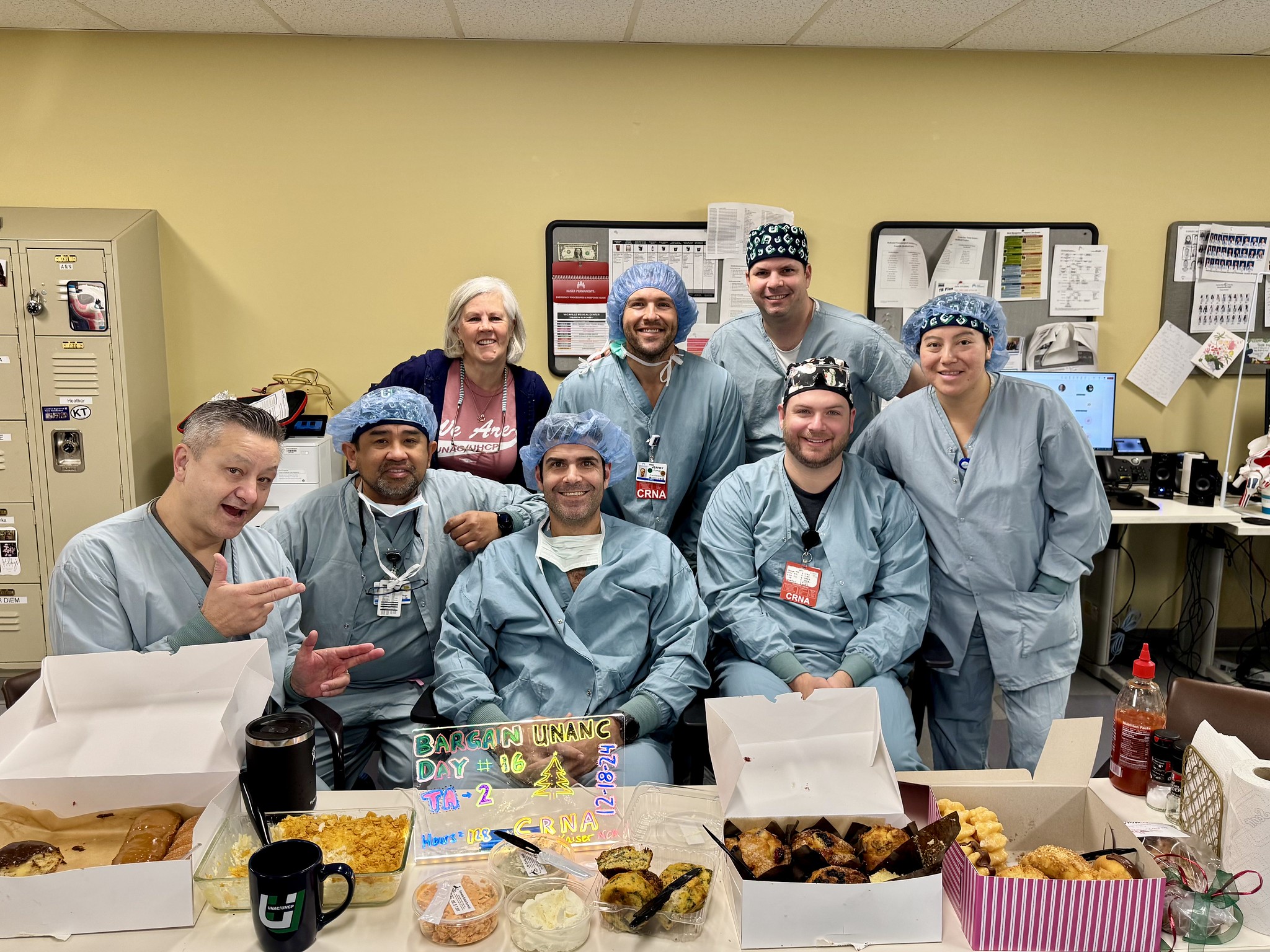
HAPPY CRNA WEEK!
As we conclude another CRNA Week, it’s crucial to acknowledge this significant milestone in our profession’s history. California has consistently been at the forefront of critical moments in nurse anesthesia history.
A landmark legal victory for our profession occurred here. Wilmer Chalmers-Francis, representing the Los Angeles County Medical association sued nurse anesthetist Dagmar Nelson, claiming that anesthesia is the practice of medicine. The California Association of Nurse Anesthesiologists (CANA) was formed to defend this challenge. The lawsuit was ultimately defeated, establishing a precedent-setting legal victory for nurse anesthetists.
In the 1980’s, Jan Manino, a legendary California CRNA, led the charge at the American Association of Nurse Anesthetists (AANA) to secure direct Medicare reimbursement for nurse anesthesiologists, making us the first advanced practice providers to achieve this distinction.
Moreover, California demonstrated its leadership by becoming the largest state to opt out of the Medicare requirement for physician supervision. This groundbreaking decision, unique among the top nine most populous states, solidified California CRNAs’ role as independent practitioners.
California CRNAs continue to lead the way, not just within our state but nationally. In another step as California CRNA trailblazers, we have created one of the largest CRNA union in the state, possibly the country. This opportunity to bargain directly with Kaiser management with the unique leverage of 40,000 other UNAC/UHCP members will impact not just our Kaiser practice but will ripple throughout the state and country.
As this year’s CRNA week ends, I invite us to reflect on our profession’s rich history and embrace the groundbreaking work you have done in forming our union. We have a lot of work in front of us but, if our history is any indication, together we will build a future where nurse anesthesiologists thrive for generations to come.
Peter Sidhu, UNAC/UHCP Executive Vice President shared, “To the CRNAs on the front lines: Your skill, your dedication, and your unwavering commitment to patient care are the lifeblood of our healthcare system. You are the silent force ensuring comfort and safety in moments of vulnerability.” “This Nurse Anesthetist Week, we celebrate not just your expertise, but the profound difference you make in each life you touch. Keep leading, keep caring, keep inspiring. Your work is invaluable, and you have the full support of our labor movement standing with you.”
By: Danny Bell, DNP, CRNA
Bargaining Team Member: Vallejo, Vacaville, Sacramento
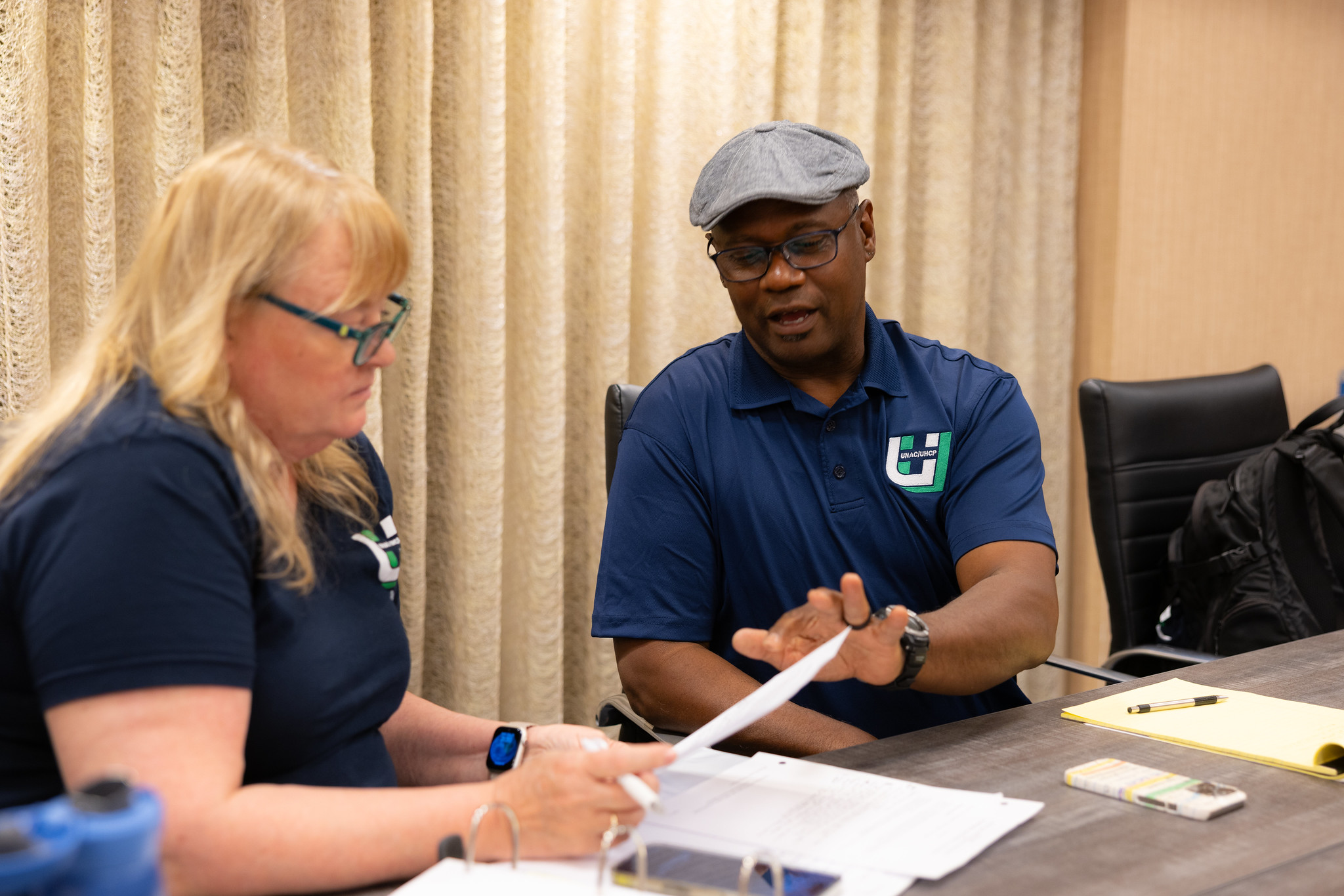
Game On: San Leandro
The fight for equity and a voice at the table continues. Management remains obstructive and engages us at a glacial pace. Complicating matters further are the two concurrent situations involving CRNAs in the GSAA: negotiations of the broader NorCal UNAC/UHCP contract and the forced change in work status for CRNAs at Kaiser San Leandro, imposed to accommodate a massive hospital renovation project.
This 106-day endeavor, spanning from December 2nd, 2024 to March 26th, 2025, will involve closing half of the Main OR to replace flooring in critical areas like the OR, L&D, and NICU. To accommodate this disruption, CRNAs are expected to work more 12-hour shifts, including weekends and major holidays, to minimize case backlogs. Despite the significant impact on our work-life balance and potential negative consequences for patient care, we have been offered no incentives or accommodations.
Kaiser has engaged in direct negotiations with various unions and staff, including CNAs, EVS and surgeons, offering incentives like extra pay, transportation allowances, and free meals. However, CRNAs have been completely excluded from these discussions and offered nothing. Zip. Nada. Kaiser has violated established labor practices by creating schedules and directly approaching staff without consulting us as a union.
In response to these unfair labor practices, we, as UNAC/UHCP, have filed charges with the Nation Labor Relations Board (NLRB). We are keeping up the pressure on Kaiser to do right by us. We will not tolerate bullying, disrespect, and unilateral decision-making.
With just 29 days remaining before the floor repair project begins, Kaiser has the opportunity to find a fair, equitable, and sane solution that prioritizes the well-being of CRNAs and patient care. We, as your colleagues, friends, and classmates, will continue to fight for our rights and protect our profession.
Game On!
Kevin Smith, MS, CRNA LTC, USA (ret)
Bargaining Team Member
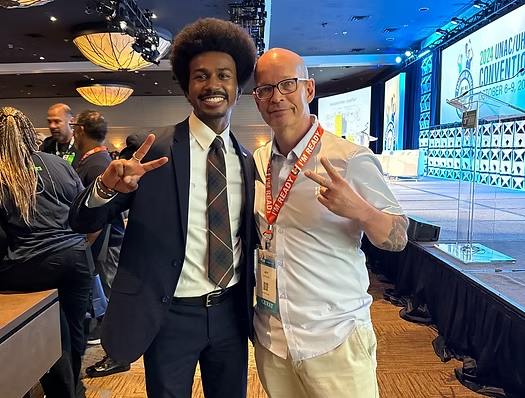
From left to right: Tennessee Representative Justin Pearson, Jeff Cathcart (CRNA)
Inside the UNAC/UHCP Convention: A Frontline Perspective – Part 2
By Jeff Cathcart, CRNA
A month or so ago, at our bargaining session in Oakland, we were introduced to Charmaine Morales, RN, the elected President of UNAC/UHCP. She had heard of our struggles at the table and came down to personally attend our bargaining session. Peter Sidhu, RN, the elected Executive Vice President, has attended a couple of bargaining sessions as well. At the time, I really didn’t put much thought into their attendance.
Last week, Sanne, Danny, and I (Jeff) attended the UNAC/UHCP Bi-annual Convention. When we entered the Convention Hall and noticed seating for a thousand people, who each represent roughly forty people (forty thousand members in total), the size and scope of the Union began to sink in. When I witnessed the reception Charmaine Morales received and the National Leaders she round-tabled with on stage, it further hit me.
Originally meeting Charmaine and Peter, I had no context as to their prominence and influence. Realizing that they took the time to personally attend our bargaining session made me realize how truly vested every member of the Union is in our success. Their hands-on approach from the top down and our access to those figures is impressive and reassuring. One early morning, the three of us ran into Charmaine in the hallway and were again blown away that she not only knew exactly who we were but knew us by name. Later in the day, we had a similar experience with Joe Guzynski, who’s the Executive Director of UNAC/UHCP. Can any of you imagine Greg Adams, your PIC, or even your AMGA knowing who you are, what you do, or your name in passing? Personally, it made me further realize what a great decision it was in choosing UNAC/UHCP to represent us.
Originally, the convention was scheduled to take place in San Diego. The hotel workers in San Diego (housekeepers, cooks, wait staff, etc.) are fighting for a living wage and have been on strike. In solidarity with those workers, the convention was moved to Los Angeles in less than two weeks. Seeing the massive size and how well-organized the Convention was put into perspective how well-run UNAC/UHCP truly is.
Some of those National Leaders I spoke of above included Lee Saunders (president of the American Federation of State, County and Municipal Employees, AFL-CIO, with 1.4 million members), Xavier Becerra (United States Secretary of Health and Human Services), State Legislators, and Union Leaders from Hawaii, Oregon, and Washington. Point is, the Union is well-connected with influence and support across the country.
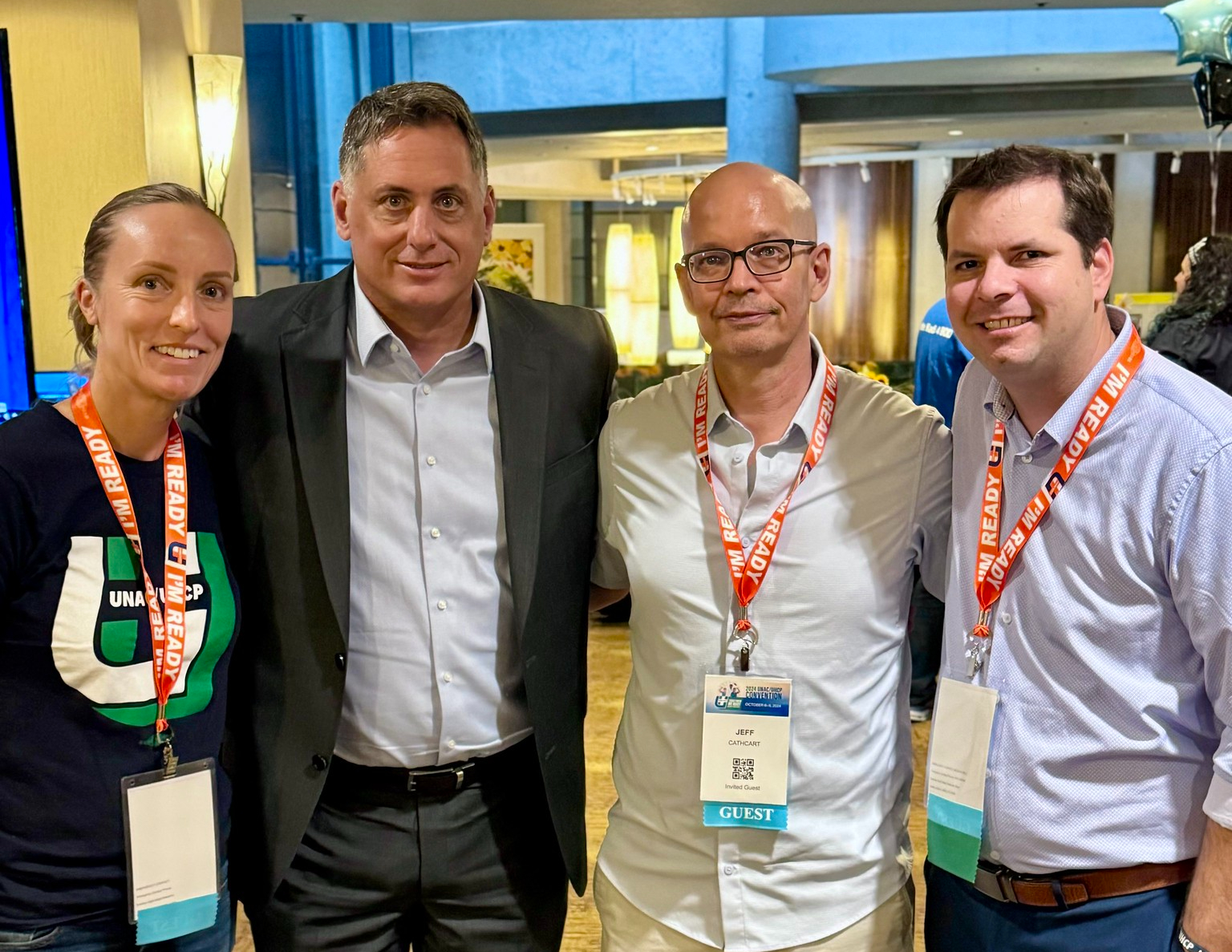
From left to right: Sanne Jacobsen (CRNA), Joe Guzynski (UNAC/UHCP Executive Director), Jeff Cathcart (CRNA), and Danny Bell (CRNA)
Inside the UNAC/UHCP Convention: A Frontline Perspective – Part 1
By Dr. Danny Bell, DNP, CRNA
Democracy in Action
UNAC/UHCP is the first union I’ve ever been a part of. My dad was a small business owner, and none of the hospitals I’ve worked at before have had unions. Before last year, when I heard “union,” my mind directly conjured up caricatures of angry middlemen who take money out of my pocket without truly knowing my practice or representing my values. As I became more informed, I realized the incredible diversity of unions out there. Some fit that caricature; however, UNAC/UHCP does not.
I had the opportunity to spend three inspiring days with thousands of our union brothers and sisters at the biennial UNAC/UHCP conference. From the moment we first stepped into the conference center, it was easy to see the power in representation. Dozens of groups of health care professionals were represented from all across California and Hawaii. Some of these “affiliates” were composed of thousands of nurses, while others had a few dozen therapists. But big or small, each affiliate shared a few things in common:
-
Pride: They were proud of their affiliate and their profession.
-
Engagement: They were eager and excited to contribute to the strength of the larger UNAC/UHCP union.
-
Voice: Their voices mattered.
Throughout the weekend, there were multiple examples of the democratic process that UNAC/UHCP utilizes to pass bylaws, make amendments, vote people into leadership, and make decisions about where our union’s resources and effort should be focused. While anyone who knows me knows of my unabashed passion for the nurse anesthesia profession, I saw firsthand the interprofessional strength that will grow as we continue to build our affiliate. This is a union of healthcare providers for healthcare providers, led by healthcare providers. A union where I am proud to belong.
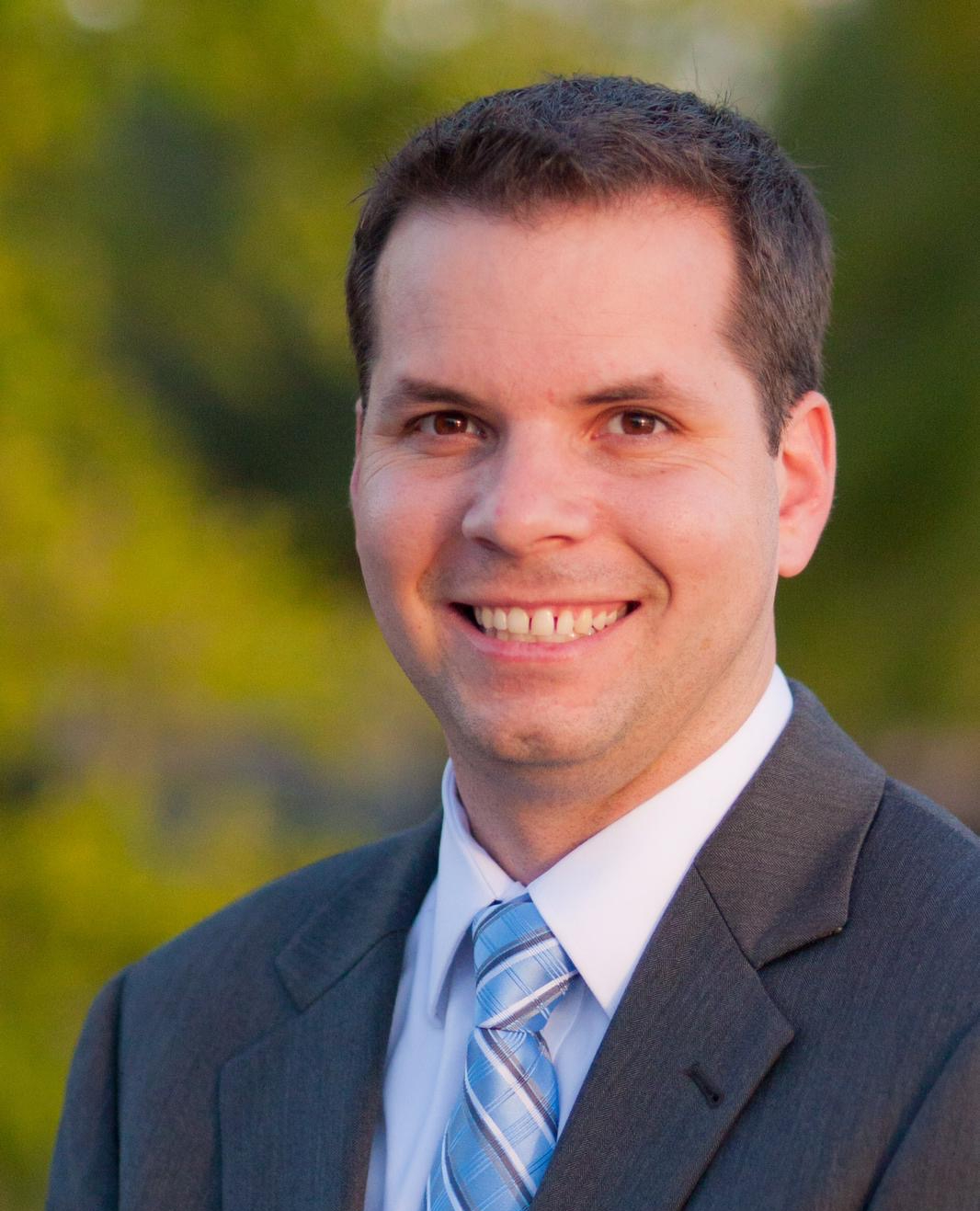
The Power of Unity: How CRNAs Are Making Their Voices Heard
By: Dr. Danny Bell, DNP, CRNA, Vallejo, Vacaville, Sacramento
As many of us know, navigating the complexities of raising teenagers can offer unexpected lessons applicable to other areas of life. This holds true for the ongoing contract negotiations for CRNAs. While some members may have recent experiences raising teenagers, others may be more familiar with being teenagers themselves. However, we can all likely relate to the communication challenges inherent in dealing with this unique demographic – eye rolls, grunts instead of sentences, and the occasional “brick wall” silence.
This strategy of unresponsive communication, which many of us encounter at home, has unfortunately mirrored our experiences at the bargaining table. For five months, negotiations have followed a predictable pattern: labor and management present their proposals, our Bargaining Team (BT) meticulously reviews them, proposes improvements, and submits counteroffers. We then engage in discussions about our reasoning for the changes. Management retreats to formulate their response, and upon their return, every single recommendation – every word, sentence, and idea – has been consistently dismissed. It’s been a frustrating cycle of 12 proposals, each one a complete rejection of our suggestions. Like dealing with teenagers, we felt we were hitting a brick wall.
However, on September 19th, a turning point emerged. We called upon CRNAs across the region to join us for a bargaining session in Sacramento. Your dedication shone through, with over 20 CRNAs participating. Suddenly, management wasn’t just facing the UNAC negotiator and the BT; they were faced with a room full of committed CRNAs – the very individuals who have provided years of dedicated service. This show of solidarity had a palpable impact. The following week, we observed a shift in management’s approach. Their questions displayed a newfound sincerity. Notably, on September 26th, for the very first time, they presented a counterproposal that incorporated recommendations we had previously submitted. The brick wall crumbled when you showed up.
These initial months of bargaining have underscored two key points. First, we are deeply disappointed by the initial lack of meaningful engagement from management. Second, the participation of our members has a direct and undeniable impact on the dynamics at the bargaining table. While the BT will continue to leverage sound logic, compelling examples, and unwavering persistence, your presence amplifies our message to a level that demands attention. We’ve spent decades seeking to be heard by management, but now it’s time to show up and make them listen. Let’s continue this momentum – Come show up and make them listen.
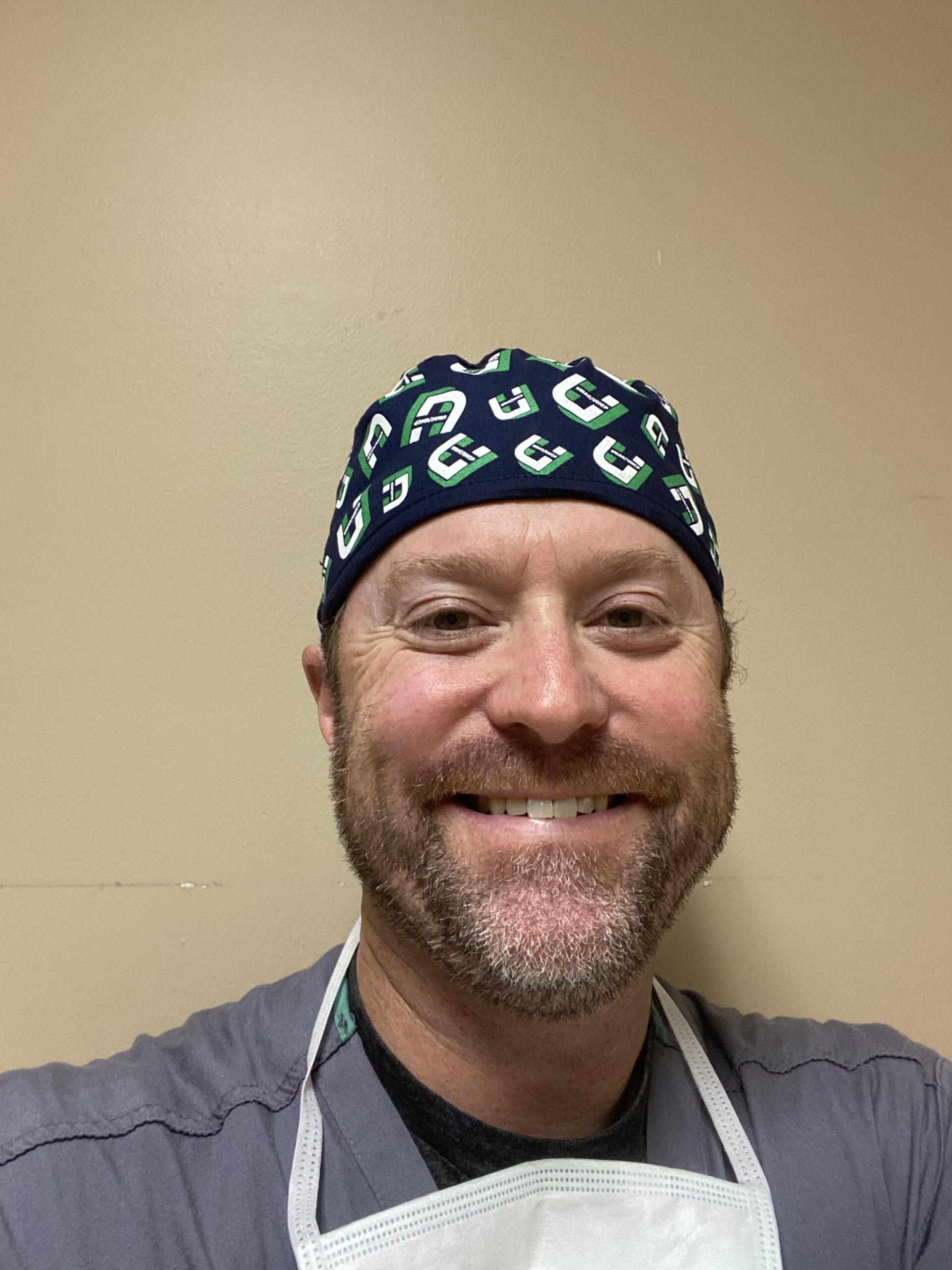
More Than Just a Spectator: Getting Involved in the Bargaining Process
By Greg Crawford, CRNA, South Sacramento Hospital
Having never been a union member, I was curious about how bargaining sessions are conducted. While my bargaining team member does a great job updating our represented area, I wanted to experience the proceedings firsthand. I attended a session in Sacramento and encourage you to do the same.
Attending a bargaining session offers a unique opportunity to witness and participate in the negotiations that shape our working conditions. Your presence allows you to gain firsthand knowledge of the issues, proposals, and strategies employed by both sides. While email updates are informative, they can feel distant and you may not understand the full weight of importance of the topics. Being present in the caucus room creates a sense of engagement and allows you to actively contribute.
Moreover, our presence as union members at open bargaining sessions can deter unfair or unreasonable demands from our employer. I was surprised to learn that there was only one CRNA on the KP bargaining team, and the other members seemed unfamiliar with CRNA practice or working conditions. These are the people negotiating on our behalf. When they know that negotiations are being observed by the very people they represent, they are less likely to engage in tactics such as intimidation or deception.
Our collective strength as union members can significantly influence the outcome of these negotiations. I encourage you to attend the next bargaining session near you to show KP that we stand together and demand a contract that represents the best interests of all involved.
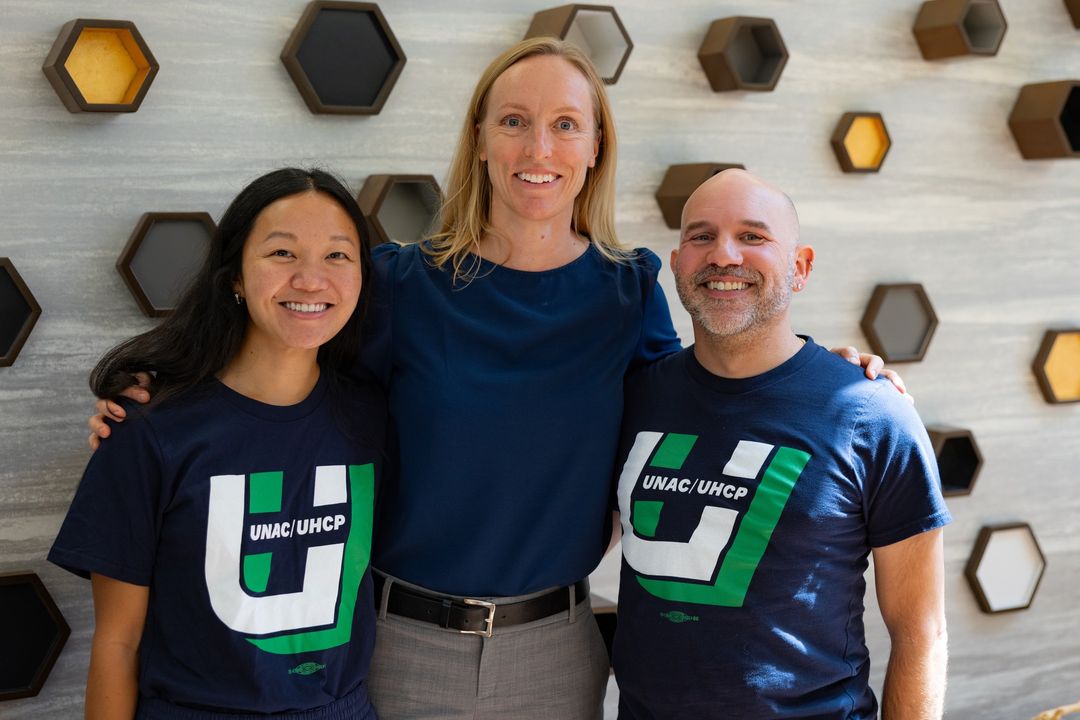
Get Action!
By Sanne Jacobsen, CRNA
“Get action. Do things; be sane; don’t fritter away your time; create, act, take a place wherever you are and be somebody.” – Teddy Roosevelt
Sometimes the simplest questions take time to mull over. Driving home from our bargaining session last Thursday, I pondered two questions posed by our chief negotiator, Brian Mason:
-
Why do you work at Kaiser?
-
What are you willing to do to keep or improve it?
The first question was a like an onion I had to unpeel, layer by layer, until I got to the simple center.
Why do I work at Kaiser?
For me, the answer boils down to location and stability. As a mother of three school-age children, I’m deeply rooted in the East Bay. I need a reliable, hospital-based job as a CRNA that compensates me fairly. The idea of patching-together contract work at various surgery centers is simply too stressful. I love the variety, acuity, and camaraderie that come with working in a hospital setting. While I could potentially leave Kaiser Oakland, my nearby options are limited to Kaiser Vallejo, Kaiser Walnut Creek, and Highland. Kaiser is the major show in town for me.
What are you willing to do to keep or improve it?
I’m committed to keeping this job and improving it. Personally, the stakes are high and trust in our employer is low. This is why I joined the Organizing Committee and actively supported the unionization process. Today, I proudly display my UNAC/UHCP scrub hat in the OR (without a cover, thank you!), place a union sticker on my locker, don my UNAC/UHCP T-shirt to our weekly department meetings, and dedicate several days a month to bargaining our first contract.
Location and stability are critical for me, but maybe they aren’t to you. That’s okay.
The questions remain: Why do you work here and What are you willing to do to keep or improve it?
Our varied answers to those questions can be a source of strength, as long as we each commit to Get Action in some concrete way. My actions as a single CRNA will mean little without the actions of you, my fellow colleagues.
Take a moment to reflect on what’s important to you about this job and what specific actions you’re willing to take to protect it. In the coming weeks, members of the bargaining team and contract action team will be reaching out to hear your ideas.
Ways to Get Action
-
Wear a UNAC/UHCP badge pull
-
Observe a bargaining session
-
Wear a UNAC/UHCP T-shirt to the locker room
-
Attend our monthly Zoom bargaining chats
-
Become a Contract Action Team (CAT) member
-
Wear a UNAC/UHCP scrub cap
-
Attend a UNAC/UHCP rally
-
Answer the surgeon’s questions about your snazzy scrub cap
-
Sign a petition
Ask a CAT member about how to get involved or if you need any UNAC/UHCP gear.
Sanne Jacobsen CRNA & Bargaining
First Look: Highlights from Our First UNAC/UHCP CRNA Bargaining Session
The Bargaining Team had our first in-person meeting last Thursday, May 9th, and it was great to finally meet the other BT members. I’m even more encouraged after working with everyone in person. The meeting was largely educational, focusing on various aspects of bargaining (decorum, roles, etc.). The morning session was for our team, and the afternoon session was a joint venture with management. It was a long day, and I won’t bore you with the details, but it was good to finally get the ball rolling.
One of the topics discussed in our morning session was power dynamics. They may seem obvious, but I’d like to share a few points. Bargaining is about power, whether real or perceived, and it is derived from you, our members, and expressed by action or inaction. There is a direct correlation between the outcome of the Agreement we achieve and the amount of collective power we have demonstrated or exerted towards management.
What does that mean in a nutshell? We, the Bargaining Team, can show power by the way we conduct ourselves at the bargaining table through unity, demeanor, and our knowledge and preparation. But our real power comes from YOU, and without your show of solidarity and unity, our power is limited.
How do we show that power going forward? We’ve all seen how RNs effectively flex their power during contract negotiations. While it may not be our usual approach, their methods are effective. Simple actions like wearing UNAC/UHCP pins, t-shirts, scrub caps, etc., actually make a difference, and management takes note. More effort-intensive actions like attending rallies and protests also matter. We clearly have enormous leverage because we provide the majority of anesthesia services across the region. How we use that leverage is really up to you, the members.
Voting to join UNAC/UHCP was just the first step; this is where the real work begins, and it’s going to take all of us to get there!
Thanks,
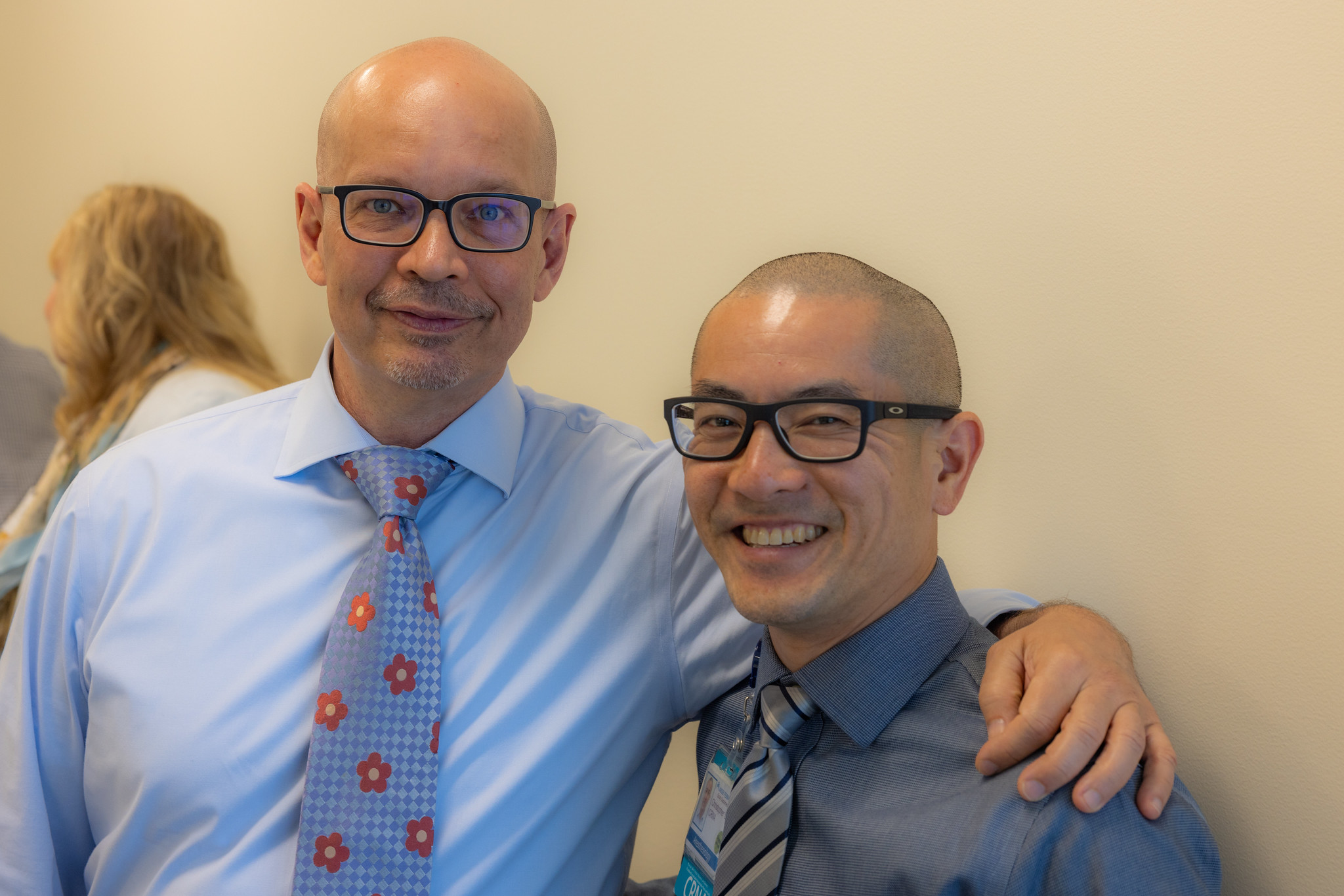
Jeff Cathcart, CRNA (pictured on the left in the photo)
Group 4 Representative – South San Francisco, San Francisco, San Rafael, Santa Rosa